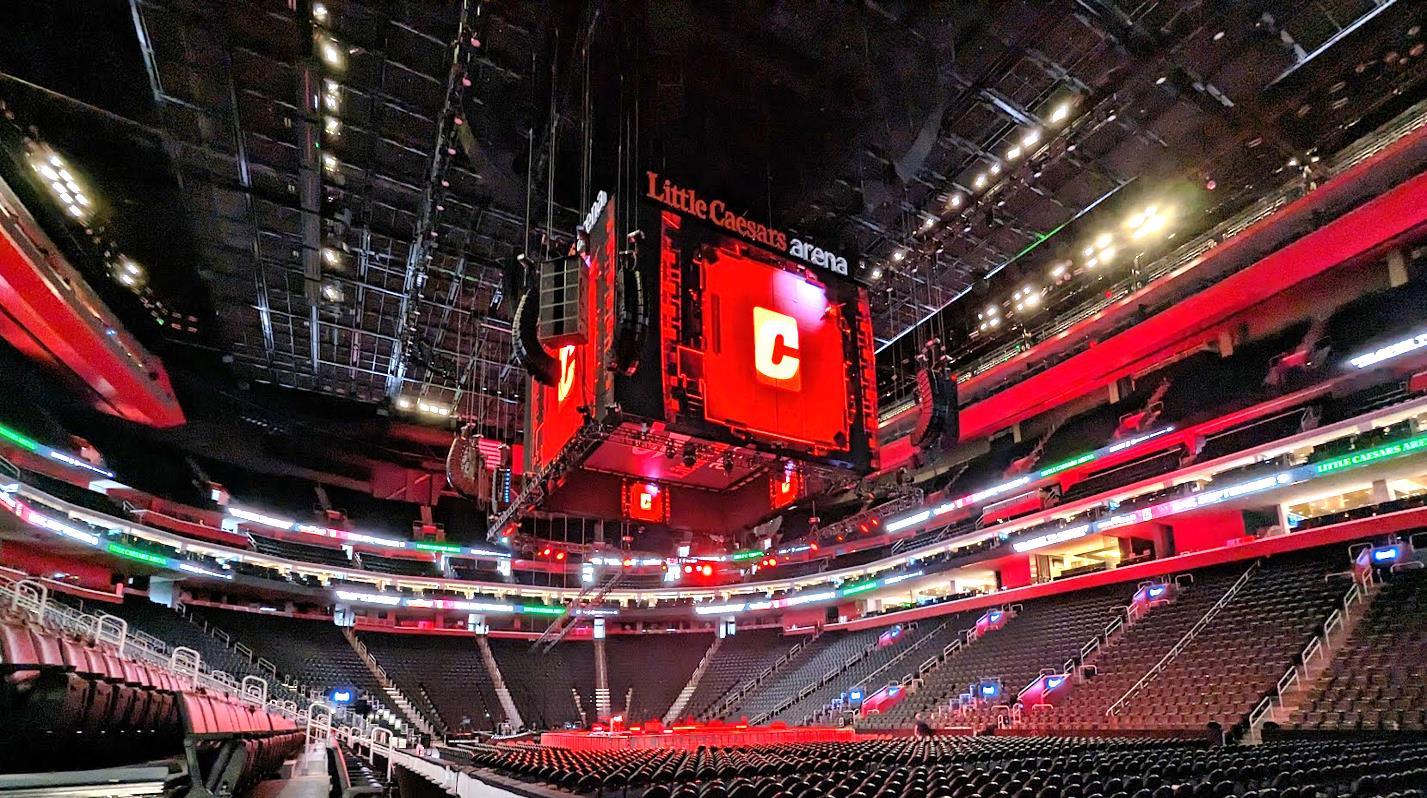
PK Alliance partner OSA International deployed an expansive in-the-round PK Sound T10 robotic line source system for Dave Chappelle's arena tour – a production honoured as Comedy Tour of the Year at the Pollstar Awards.
Arena comedy is one of live audio's most exacting disciplines. There is no wall of guitars to hide behind: a single voice must reach every seat in the bowl with perfect intelligibility, and the room's energy depends on the audience hearing every beat of timing – and each other's laughter. Delivering that in the round, in a reverberant arena, while still carrying the show's music segments with genuine stereo imaging, is a brief that punishes conventional line arrays.
Rather than ring the floor with arrays around a circle, the design used a scoreboard layout – four array positions at the corners of a square, hung from truss templates built in 40- and 50-foot versions to fit the scoreboards of typical arenas. Consolidating the rigging into four locations gave the majority of the audience on both the long and short axes of the bowl real left-right stereo imaging, and kept the hangs tight enough to the scoreboard perimeter to protect sightlines to the IMAG screens used nightly.
Each of the eight positions carried a fourteen-deep T10 array, covering from the front rows to the top of the upper tribunes. Four flown sub arrays of five T218 each were joined by ground subs and distributed front fills that pulled the sonic image back down to the performer for the audience closest to the stage.
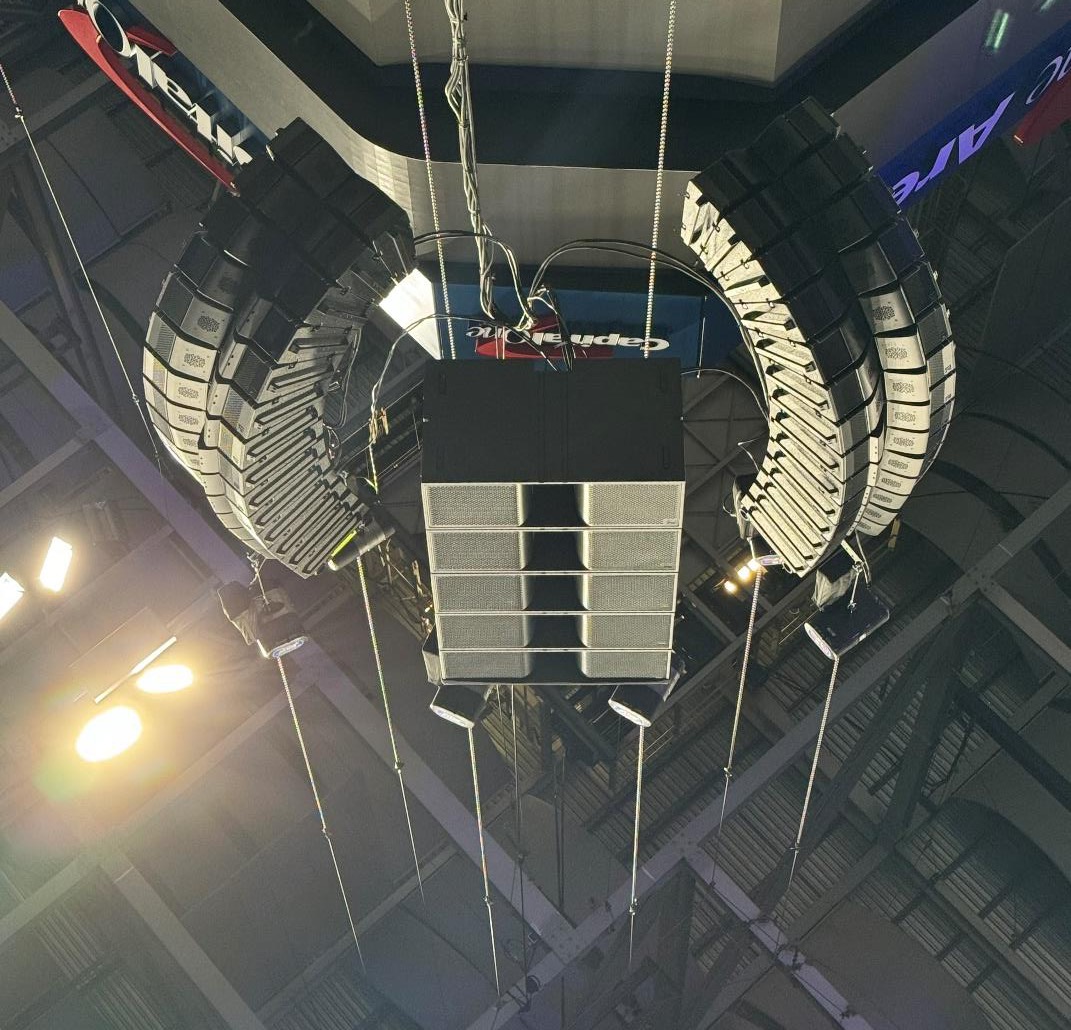
Much of the advantage showed up in the air. A T10 array flies as a straight vertical column and is shaped once it is suspended, so eight T10 arrays and four T218 arrays were installed by just two sound technicians on a daily basis. Because vertical coverage is trimmed remotely, there was no need to lower the system to change interelement angles – and no rear pullback motors, which cut chain motor counts and simplified the rigging plot.
Horizontal control is where the design earned its intelligibility. T10's coverage adjusts from ±30 to ±60 degrees in five-degree steps, symmetrically or asymmetrically, allowing tapered – and in places deliberately reverse-tapered – arrays. On the long axis, onstage angles were progressively widened from 45 degrees at the top of the array to 60 at the bottom while offstage angles ran from 50 down to 30, extending coverage into the corners of the bowl without letting adjacent arrays wash into one another.
That restraint was the whole point. Where two arrays with very different throw distances overlap, the arrival-time difference can fall outside the roughly 20-millisecond Haas precedence window, and the audience hears a discrete reflection instead of a single source – precisely the failure that destroys spoken-word intelligibility. Tapering the horizontal pattern kept those overlaps off the audience, and in the few areas down front where residual overlap remained, level differences between the near and far arrays masked it.
“Dave has a very loyal fanbase… this PK Sound technology is the real deal.”
– Dave Ockun, production manager
Across the run's 22 arena dates, the production reported no refund requests tied to sound quality – a metric the team singled out, given how routinely arena comedy generates them. The partnership between OSA and PK Sound has since expanded across genres and formats – from Megan Moroney's Am I Okay? tour to EDC Las Vegas' circuitGROUNDS stage and the lobby of WWE's corporate headquarters – anchored by the Chicago-area production leader's substantial investment in robotic line source technology.
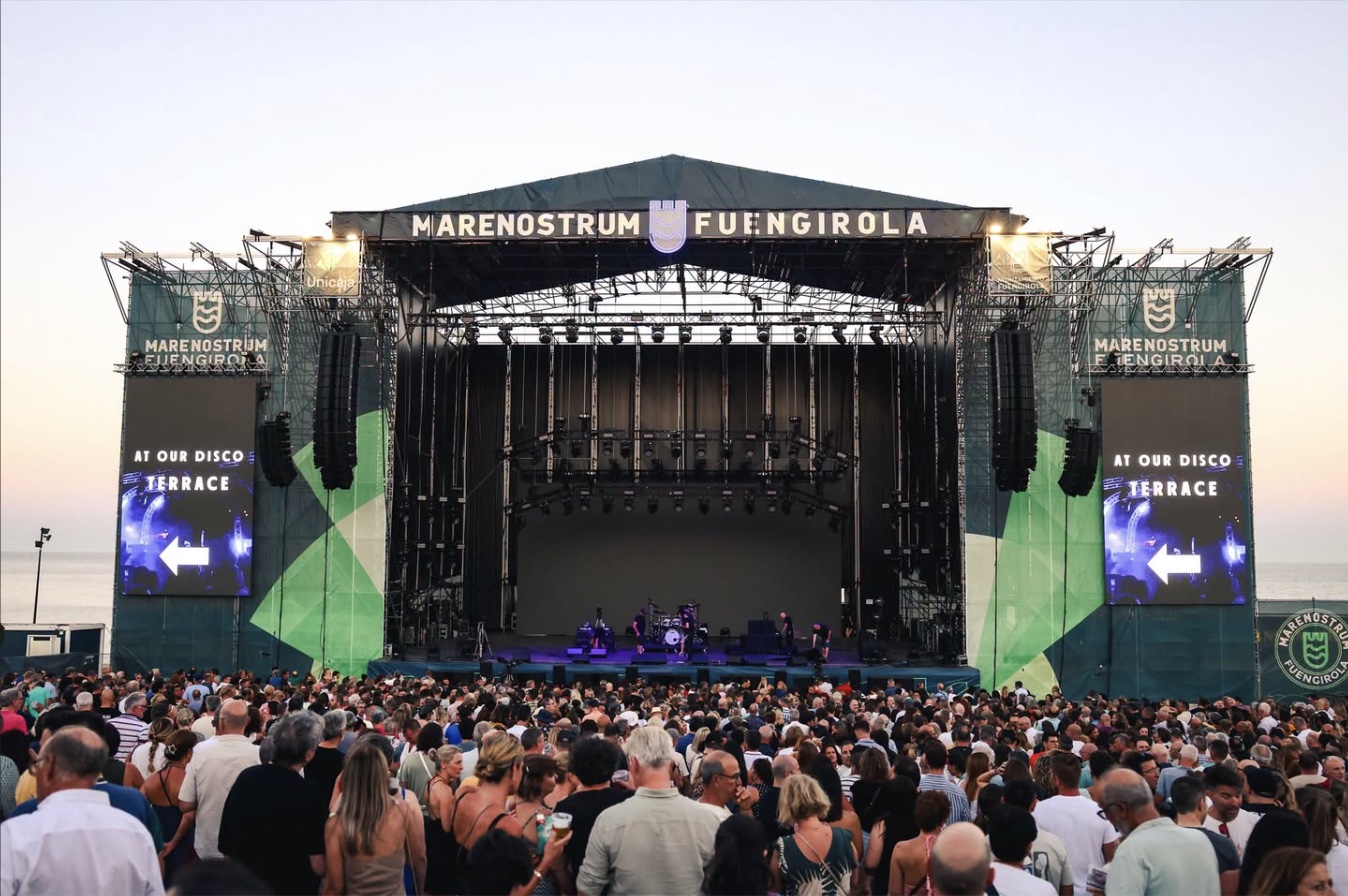
Sonocon, S.L. and Adagio PRO collaborated on a Trinity Black / T10 robotic system deployment for Sting's main stage performance at Spain's Marenostrum…
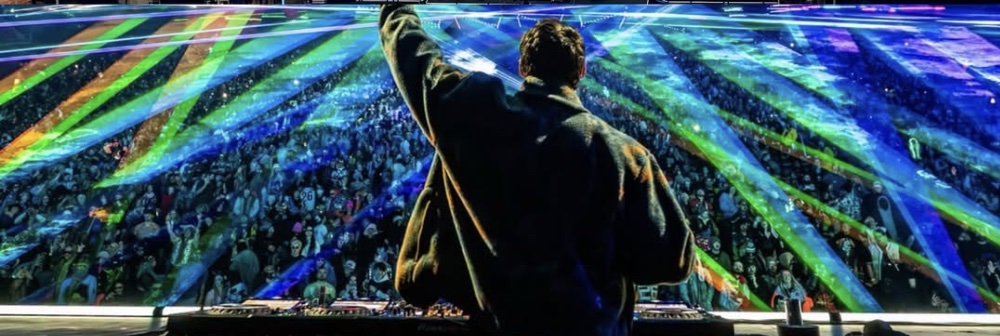
Denver's GTE deployed Trinity Black robotic systems for a string of 2026 Red Rocks dates including Crankdat, Ravenscoon and a sold-out bbno$ show,…
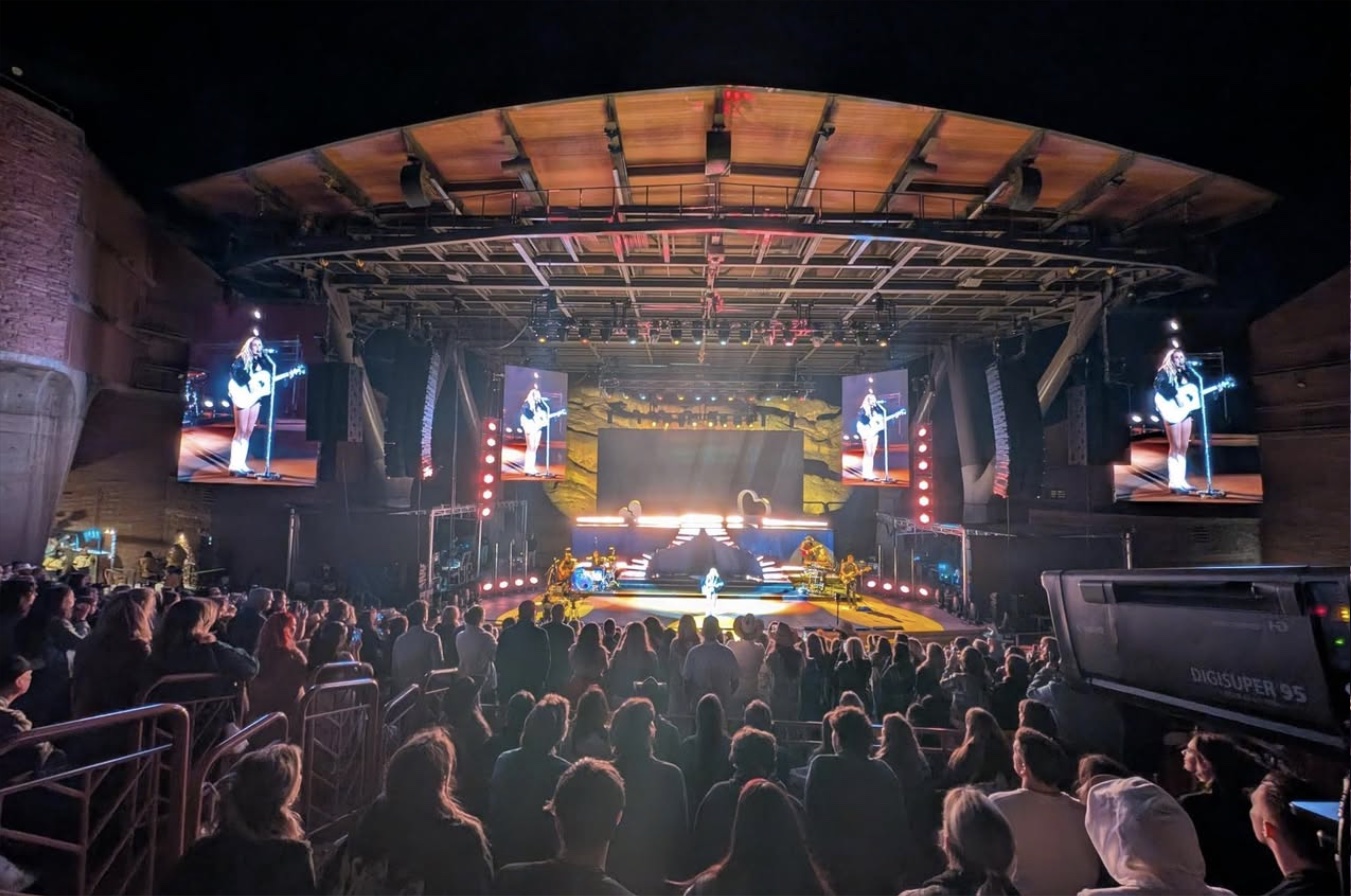
OSA supported country star Megan Moroney's Am I Okay? tour with a Trinity Black / T10 robotic system, using variable horizontal dispersion to optimize…